Category Archives: Writing

Mum, Do Not Read This Post…

I mean it

Is she gone? Ok…

I have long considered myself A Writer – in the broader sense of the phrase – whether I get paid for it or not. The money that occasionally comes with it (while nice) is immaterial to how I view myself. After all, why should the level of remuneration determine who or what I am? I don’t want to be a part of a society where we are all just the sum-total of how big our wallets are. Is that really how I am supposed to measure my self-worth? Writing is what I do. It’s what I have always done, and I will continue to do it for as long as I’m here. Period. Pay me lots or pay me nothing – it doesn’t matter to me; I’m a writer either way…

…But over the last couple of years, the writing has nearly killed me. That’s not a figure of speech or an exaggeration; nor is this, as the stand-ups would say, a ‘bit’. I was close to no longer being alive, and – although there were several contributory factors (both emotional and physical) – in my head, the writing has been the root cause of everything, and it almost pushed me over the edge without the proverbial parachute.

Very often my words will reflect, to some degree, what’s going on beyond the two-dimensional world of the keyboard, and as such you will find most of the key moments in my life have been marked, referenced, and represented in my fiction at some point and in some way. But as cathartic and liberating as that can be, the writing is predisposed to darkness, so it means I’m invariably taken to some murky places.

I have been depressed. Most of the people around me would probably argue my ability to perform such a self-diagnosis, but that doesn’t matter. I was. Sometimes you don’t need a degree or a comfortable couch to see depression in the mirror; in the same way that if there’s a bone sticking out of your knee, you know (at the very least) that you’ve broken your leg. I just saved everyone a little bit of time. I’m not saying it lightly, nor am I trying to court sympathy, but it is true. Perhaps I still am depressed: I don’t really know for sure. What I do know is that I’m coping better with the demons inside my head today than I was then.

I read an article a while ago that suggested creative people (and, for the sake of argument I’ll go ahead and include myself in there) are more susceptible to depression than people in any other walk of life. Even dentists. But don’t take my word for it: Raymond Chandler, Agatha Christie, Charles Dickens, Ernest Hemingway, Sylvia Plath, and Mark Twain are just a handful of the famous authors who have suffered. It’s something to do with the way we are designed – the way we are programmed to think. We’re just different. We have hidden depths, and sometimes a mind can lose its way down there. I know that is certainly true of me and mine.

Well, I’ve been here, alone in this metaphoric room, for a long time. There is little light, and I have no key for the door. There have been long periods when I didn’t think I would make it back out – and perhaps more importantly, moments when I didn’t care if I did. I think it’s difficult for ‘non-creatives’ (to coin a phrase) to empathise, and that’s not intended to sound as pretentious as it possibly does. I’m merely talking from experience, and the people I have surrounded myself with over the years.

Why don’t I just give it up then?

Well, you see, the thing about the writing is – I am not really in control of it. I never have been. Now of course, the negative suggestion within that admission is that the writing is something I do not wish to do, but that couldn’t be further from the truth. I have always wanted to write, and I am glad that I can do so to a (seemingly) reasonably high standard, but it is an addiction of sorts. I cannot not do it. It’s my drug of choice. Writers will often say similar things in an attempt to romanticise their craft, or to create an enigma, but I’d like to present it more as… why.

For the majority of the time I write whatever needs to be written. Sometimes other parts of my life are temporarily knocked off balance by this. I forget things. I zone out of conversations and into whatever world I’m creating for my characters. I can be short-tempered and (even by own standards) overly sarcastic. I occasionally don’t see the bigger picture, or what’s going on around me in the ‘real world’, if I’m focused on the detail of a story. Usually the upset is temporary, but infrequently the collateral damage leaves scars, and sometimes those scars don’t heal all that well. In the past, I have always scored these off as necessary evils, but in my darker moments I often question the validity of it all, and the impact my passion has had on those around me.

So in short, the writing has simultaneously enhanced my life, and very nearly destroyed it. I don’t know where I’d be without it, but I certainly don’t think I’d be… me. It is a fundamental part of who I am. It has come to define me, and – for better or worse – I have to accept that.


The Accidental Novel…

In June 2012 I wrote a short children’s comedy called The Stork, about ten-year old best friends Jack and Patrick, as they discussed where babies came from. It was intended to be an antidote to the darkness and depression that sometimes permeates my words, but a few months later I wrote Robotosaurus Rex, which was another snapshot of these two boys’ childhoods; this time as they talked about time travel. Over the last few days I finished writing When We’re All Grown Up – the third tale in what I now am beginning to see as chapters in a larger project that I had not planned at all.

I have no immediate plans to write a fourth entry in this series, but The Jack & Patrick Chronicles (as I now see these stories) do lend themselves to other conversational adventures. Kids talk about a lot of stuff – some of it banal and meaningless, but a lot of it is interesting and worthy of some lightly humourous exploration.

Before I know it I could have something much larger on my hands.

Sorry, Try Again…

I recently received a rejection for my short piece Cleavage & Cleavers. Not a problem – I have already moved on to the next one – but the editor had this to say in her response, which I thought was worth sharing:

While it was well written, we’re not interested in stories that take noir to a new definition of dark.

Sorry

Out With the New and in With the Old…?

LightbulbI just finished writing a 6,500 word horror story called The Quick Brown Fox, which means that in the last six months I have completed three pieces that have been ‘on my books’ for many years. All three have turned out pretty well, but it does make me wonder why I have gone back to these old ideas all of a sudden… and is it just my imagination, or are they coming together better than the finished products of my more recent ideas?

I think a lot of the ideas I had when I was younger were very ambitious (too ambitious for the kid who was dreaming them up) so many of them were left unwritten or partially scribbled down to be tackled at an undisclosed date further down the line. Now that I have a clearer understanding of what I am capable of producing – and more importantly, what I’m not – my ideas these days are more… appropriate. Does that mean I have lost my imagination as the years have progressed? I don’t think so. Sure, I have pulled in the edges a little, but I still have the ability to come up with something a little left field when I need to.

Don’t get me wrong: not every idea I had back then was worth saving. Far from it. There are more than a few duds in amongst them that even the greatest literary mind couldn’t rescue, but another difference is that now I can (usually) tell which ones they are, throw them in the bin, and move on.

I still have a lot of (good) ideas from years ago that I want to get around to completing before I shuffle off this mortal coil, but hopefully I can balance that with some of the more recent imaginative acquisitions I have had as well.

Good Question, Greg Chapman…

InterviewTo coincide with the release this week of my horror novella Replay, fellow Australian author and sometime artist, Greg Chapman (who Dark Prints published last year via their novella series) shouted a few questions to me from the other side of the pond.

Hopefully, when he reads the story, he won’t want to pull the interview down!

You can pick up Greg’s effort, Vaudeville, for the special April-only price of 99 Australian cents.

Back to School (Again)…

The leggy waitress stood there – a chewed biro in her right hand and a tattered notebook in her left. She tugged at the collar of her too-tight uniform and fanned herself with a plastic menu. Her face was red. She looked like a pimple that was ready to burst.

– Replay

My horror novella, Replay, is now available for purchase directly from Dark Prints’ website. In the coming days you will also be able to purchase it from other online retailers such as Amazon.

If you do buy it, I’d love to know what you think.

Back to School…

ReplayI am pleased to say that my horror novella debut, Replay, will be released electronically by Dark Prints Press on April 15th, for the low-low price of $3.99 Australian (other currencies are available) either as an instant download from the main site, or via e-retailers such as Amazon, Bookworld, and Kobo. Replay is an unapologetic, old-school horror tale about a reunion that should never have been. Fate may be late to the party, but she is always on her way…

I am particularly impressed by the thirty-second promotional video that editor, Craig Bezant, put together for the release:

Dark Prints is an Australian outfit I have been involved with several times over the last few years. I had short fiction in the first four issues of the now sadly defunct ezine Eclecticism; and was also featured in The One That Got Away, a dark crime paperback anthology, released in 2012, so I am very pleased to be extending the relationship further with this release.

When Yes Actually Means No…

withdrawnLast week I had a short story accepted, which is always a good feeling, especially as it’s been a fairly lean year thus far, and the piece in question is a good one. However, after reading over the contract and investigating a little further, I decided not to go ahead with it. Shame.

I have withdrawn an accepted story before, (and that was at professional rates, which stung a bit) but this is the first time doing so has felt… icky. Suffice to say, I’ve learned a valuable lesson about the process of submitting material, and where to submit material; and it’s reminded me that even though I’ve done it hundreds upon hundreds of times, I’m still prone to the (occasional) schoolboy error.

For any writers who may be reading this, I guess there’s a slightly heavy handed moral to this tale. It’s your work, so take pride in it. Believe in your words, and don’t sell yourself short. Know where you are sending your efforts, and be careful.

It’s a jungle out there.

The Darkness Loses a Soul…

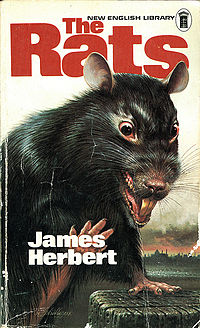
James HerbertJames Herbert died today. He was sixty-nine years old.

My dad was a fan. In fact Moon and The Magic Cottage are probably the only two novels I saw him read. Ever. Years later – when I read both of these for myself – I thought if that was as far as my dad dipped his toe into the library of books the world had to offer, he could have done a lot worse.

I read a dozen of Herbert’s novels, and while he didn’t hit the nail squarely on the head each time, he was one of the few authors I would keep going back to every now and then, because he could always be relied upon to deliver a good, solid story, and I knew that he was capable of great things. The Fog is one of my favourite books of any genre, and definitely in the top handful of horror tales I have ever read.

He is often – unfairly, in my opinion – compared to Stephen King; partly because they both had their first novels published in 1974, but mostly because they both wrote broadly in the horror genre, albeit on opposite sides of the Atlantic pond. But the similarities really end there.

Herbert was (almost exclusively) a balls-to-the-wall horror writer, and he didn’t pull any punches with his prose. Having said that, he was never gratuitous just for the sake of it, and he didn’t care about cheap shocks either. He wrote it that way because that’s how he saw it, and I have always admired him for that.

Rest in peace, James: you will be missed.The Rats