Friday Fiction Fixes #6…

The Day of the Triffids by John Wyndham – 1951
John Wyndham_1951_The Day Of The TriffidsI have read a couple of Wyndham novels, but fifties classic The Day of the Triffids was my introduction to him. When I was fourteen my English teacher tasked us with reading the book, which turned out to be one of the better literary choices I was given in high school. In fact, I enjoyed it so much that the following year, when I had to write a report on a novel, I chose this one.

Twenty-five years later, and I still have that report. Actually, for some reason I have three versions of it, the first of which is footnoted with a rather scathing teacher’s comment, that begins like this:

As I read, Brian, I began to feel more and more uneasy. I suspect you have relied very heavily on the intro to D of the T or some study guide.

…and ends like this:

Your review is totally devoid of quotes. You need to reference throughout to evidence from within the text to back up your extremely sweeping statements.

The fact that I tried to be edgy by titling it, The Day of the Triffids: A Textual Appreciation, probably didn’t help my chances, and with great stuff such as:

It is made up of many chapters of varying lengths.

…it’s difficult to argue the lack of effort I put in to the essay, which is a shame, because I really did enjoy the story. It was the first time I had dabbled with science fiction, but the post-apocalyptic premise grabbed me from the start, and the strong emphasis on character development over the typical sci-fi stereotypes, made the prose accessible and engaging to genre virgins like me.

So, after a quarter of a century it would appear that I still haven’t grasped how to write an in-depth analysis of The Day of the Triffids, but trust me – I’ve read it. And it’s good.

Tuesday TV Testimonials #6…

Midnight Caller (1988 – 1991)

This is a somewhat overlooked classic from the late eighties that I don’t expect many of you to remember. I was barely a teenager when I started watching this, but I was hooked from the start… even though it was undoubtedly aimed at a more mature demographic. Maybe it was the seedy nature and inherent darkness of the show; or more immediately, it could have been the sexy blues and jazz inspired theme. Either way, I remember it fondly, and it was one of my favourites growing up.

midnight-caller-503917786d562

Gary Cole has gone on to do a lot of television and movies since this (and he had done a lot before), but Midnight Caller is where he really cut his acting chops. He played ‘The Nighthawk’ Jack Killian, a former cop who has decided to try his hand as a talk radio host, while investigating his callers’ problems on the side. Trust me – before the internet took over the world, talk radio was becoming quite the thing. In that regard it was very much a product of its place in time, and it would probably be difficult to replicate in 2017.

At just over sixty episodes, Midnight Caller didn’t have a particularly long run, and it isn’t remembered fondly or even often in TV retrospectives, but – by tackling difficult and controversial subjects – it was quite a progressive show for the sometimes sterile and saccharine eighties, and one deserving of a little more love than it gets.

And with that, for the few Midnight Caller fans still out there who will appreciate the reference, good night America… wherever you are.

Monday Movie Mentions #6…

Way Out West (1937)

hqdefault

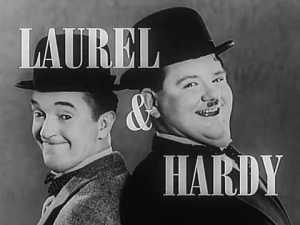
The classic title card.

I have been a great fan of Laurel & Hardy for many years, and this feature is widely regarded as their finest effort. I have a few other suggestions for that spot, but it’s certainly a solid choice.

A long time ago I introduced one of my ex-girlfriends to Way Out West (and the comedy duo in general) and she memorably shrugged indifferently and said to me, “I’ve seen Steve Martin do that”, as if somehow Laurel & Hardy had travelled forward in time, watched a bunch of Martin’s movies and then gone back to film their interpretation in black and white. To this day I still don’t know if she was pulling my leg!

Eighty years after Way Out West, and there is still no double act that has the same chemistry or comic timing as the original masters of the art, and that perhaps says as much about Laurel & Hardy as performers as it does about the progress of cinema since they stopped making movies.

waywest00

“Eat the hat.”

From the running gag of Stan using his thumb as a lighter, to the scene where he eats Ollie’s hat after losing a wager, to Ollie’s continual breaking of the fourth wall by looking into the camera in frustration at his partner, Way Out West is a classic of the genre that deserves its place in history.

I know it’s difficult for the current generation to go back and check out these old movies, but I rewatched this one last week, and if you approach it with an open mind, I think you’ll find that it holds up surprisingly well.

But do yourself a favour and watch it in the original black and white form – those colourised versions are (for the most part) cheap and tacky.

Sunday Song Suggestions #6…

Chains – Tina Arena – 1994

When I was younger I used to exercise more than I do these days. Actually, scratch that last bit: when I was younger, I used to exercise. Period. Anyway, for some reason, Chains – which I had bought on disc just before – is what I would put on for my daily sit-up session. Lying on my bedroom floor, feet hooked under the bed, there was eighteen year old me training for my own personal Rocky montage.

With a powerful voice and a heavy soul influence, Tina Arena didn’t fit the familiar Antipodean pop mould that was in vogue at the time. She had more in common with the then current crop of respected vocal gymnasts, such as Whitney Houston, Celine Dion, and Mariah Carey, but she only enjoyed a fraction of their successes.

Chains was released in 1994, and although Tina Arena had been popular in Australia while I had been living there, it had been about four years since I had heard anything from her, and this was her first release in the UK. Unfortunately, she slipped out of favour here rather quickly thereafter, and this is probably the only song most locals will associate with her.

It’s been a while, but I may just have to throw in a few sit-ups, for old times sake.

Friday Fiction Fixes #5…

The Ash-Tree by MR James – 1904

MRJames1900It’s very difficult to read stories of this vintage – even those written by a deity of the supernatural genre such as MR James – after spending any length of time with modern authors. It takes a while to acclimatise to the differences in language and the way that the story itself has been put together, but stick with it – it’s a worthwhile excursion.
In some regards it is an unfair comparison, because it’s apples and oranges. MR James was writing at a time when readers did not have the attention span of a gnat. The Ash-Tree – about an inherited English estate with a cursed history – is only 5400 words, but James, one of the most atmospheric writers of his generation, manages to pack more in to that word count than many twenty-first century authors could do with four times the length.

The Ash-Tree was published in 1904 in James’ first collection of shorts, Ghost Stories if an Antiquary, and the full text is available to read for free online here, if you want to give it a look.

Tuesday TV Testimonials #5…

Rocko’s Modern Life (1993 – 1996)

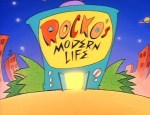
Rocko_title_cardCartoons play a large part in the lives of many children, but Rocko’s Modern Life – featuring an impetuous wallaby and his group of often neurotic, anthropomorphic friends – didn’t even begin broadcasting until I was seventeen. In fact, in a sombre kiss with history, I was watching an episode when the news of Princess Diana’s death broke, on the 31st August, 1997, and interrupted the show.

Rocko_WallabyWith the exception of one other television show – which I will get to later in this series – Rocko’s Modern Life was the only cartoon that I followed when I was, well… too old to really be following cartoons. The thing that appealed to me about Rocko and his buddies is that their target audience was never children. Sure, it was an original Nickelodeon production, but the crudely drawn characters and rough-around-the-edges animation fed into some adult humour that was often filled with innuendo and suggestion. Unfortunately, because of that, its mainstream success was ultimately limited.

It was very clever, at a time when that kind of thing was hard to find. Even now, twenty years later, there really isn’t anything like it. If you haven’t seen it, and you are in the mood for a little animated subversion, you could do a lot worse than this cult classic.

Monday Movie Mentions #5…

The NeverEnding Story (1984)

falkor1

Falkor – the cutest dragon in cinema.

I was never a great fan of fluffy fantasy movies, not then and not now, but this was different, although perhaps more importantly, I was different. It was probably the first movie in the genre that I really had an affection for.

Cinema was a lot more innocent in the early eighties, and The NeverEnding Story, which came out in 1984, was a product of that time. It was a golden period for my memories, and like a lot of families then, we had a library of movies that had been recorded onto video (back in the dark VHS days) and I probably wore the tracking out on this one more than any other.

23642-1-optimized_588a105ed807c

To avoid awkwardness, the Empress at a more appropriate age.

The fantastical plot appealed to me at the time. Bastian, running away from some school bullies, opens a mysterious and ancient book (in an even more mysterious bookstore) and, well… falls into the world created within. Who amongst us hasn’t wanted to do that at one time or another?

But it was the characters that made this adventure so enjoyable – from Falkor, the least frightening dragon in the history of everything, to the similarly soft Rock Biter, it was all very muppet-like. It was unashamedly a movie for kids.

And yes, just in case you bump into my sister, I’ll have to admit that I did fancy the Childlike Empress, the Queen of Fantasia, played by Tami Stronach… but even though she was just a little girl at the time, I was three years younger than her, so I should get a pass on that.

Typical – I always have liked older women.

Sunday Song Suggestions #5…

I Remember You – Skid Row – 1990

Skid Row had a few hits in the late eighties and early nineties, but unfortunately for them, they were around at the same time as mainstream rock juggernauts Bon Jovi and Guns N Roses, so that was never going to be good for their longevity or success. Now they are little more than a footnote in the history books.

Having said that, I Remember You, which is taken from their self-titled 1989 debut album, and is quite possibly their most widely known song, is unequivocally one of the best power ballads of the year. It didn’t crack the top 5 in the US, barely made it into the top 40 in the UK, and topped out at number 12 in Australia, which is where I learned to love this song as a teenager… back when the charts meant something.

Yes, as you would expect, the song is all big hair and sweeping guitar solos, but give it a chance if that’s not your thing – lead singer Sebastian Bach’s soaring vocals are up there with the very best in the hard rock genre.

What’s in a Name…?

It’s no secret: I’m a big fan of the First Blood/Rambo series. But I’m the first one to admit that this is undeniably the most confusingly named collection of movies in cinema. These are the official titles for the four films, in the order they were produced and intended to be viewed:

  • First Blood
  • Rambo: First Blood Part II
  • Rambo III
  • Rambo

So… First Blood is the first film, released in 1982. So far, so good. It is the only entry in the series with a legitimate title.

The first sequel to First Blood was released in 1985 and is called Rambo: First Blood Part II. The series now has the prefix of Rambo attached to it, which is really where all the problems begin. It’s also slightly concerning that the second movie has the suffix of First Blood Part II, instead of Second Blood, which although lacking in resonance, would have been – at the very least – grammatically cleaner.

In 1988 the third film in the franchise is released, and it is simply called Rambo III, which on the surface is entirely acceptable as it is indeed the third film, but completely maddening as there was never (and has never been) a Rambo II. As its predecessor was Rambo: First Blood Part II, the convention would be for the third film to be called, Rambo II: First Blood Part III, but that is a little clumsy, so I can understand dropping the suffix. You could however, drop the prefix instead, and simply call the third entry, First Blood Part III, which is correct by the series’ logic thus far, but as the decision seems to have been to drop the association with First Blood entirely, the only correct chronological way to present the title is as Rambo II, but as you can see, that title is entirely absent from the series.

The fourth and final film in the series from 2008 – the one that follows Rambo III – is called Rambo. And no, it takes place twenty years after Rambo III, so it’s not a prequel (which would perhaps somewhat justify the title), nor is it a remake or a reboot of the second film in the series (which shares a similar name). It is effectively Rambo IV.

Stallone has gone on record as saying he will not be making another entry in the series, but if he did, there’s a fair chance the fifth film would be called Rambo II.

Just sayin’.

Friday Fiction Fixes #4…

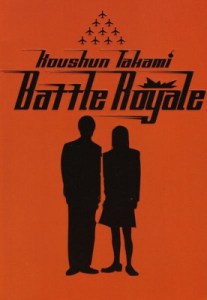
Battle Royale by Koushun Takami – 1999

Battle_Royale_Novel_cover

The minimalist UK cover.

If you’ve seen (or read) The Hunger Games you will have a fair idea of what this very good Japanese novel is about, because author Suzanne Collins did a stellar job of ‘borrowing’ some of the themes and plot points for her decidedly more child-friendly dystopian work. It’s a shame, because Battle Royale came out almost a full decade earlier and often falls into the shadow of Ms. Collins’ piece, and as a result, doesn’t really get the credit it deserves.

The story is simple. As part of a student programme authorised by the Japanese government, a class of high school students are taken to a deserted island, provided with weapons, and forced to kill each other until only one of them is left. It’s not Dickens, but it is effective.

The translation is not perfect, and sometimes it reads a little awkwardly, and you can tell a phrase hasn’t made the jump from Japanese to English with the greatest of ease, but the bones of the story are universal. At over 600 pages it’s quite a long novel, but once the action starts it rarely lets up.

It would also be prudent at this juncture to issue a caveat. Battle Royale may very well have been the inspiration for The Hunger Games (although Collins denies it) but don’t let the connection fool you. Takami’s novel is extremely violent and disturbing, so if you’re going to read it… you have been warned.